
Harnessing procurement data has become one of the most influential ways dental practices refine their operational performance, strengthen financial stability, and pursue long-term growth with clarity. In modern clinical environments, the supply chain is no longer just an administrative function; it is a strategic asset. When procurement data is captured, structured, and leveraged effectively, practices of all sizes gain a powerful advantage—greater visibility, reduced inefficiencies, and the ability to scale with confidence. The shift from traditional manual ordering to data-driven decision-making opens a new frontier for practices aiming to elevate performance while supporting teams with more streamlined workflows.
Procurement data extends far beyond simple ordering records. It includes usage patterns, inventory consumption trends, supplier comparisons, stock-turnover metrics, operational workflows, and budget tracking. When analysed collectively, these datasets reveal opportunities to minimise waste, enhance predictability, strengthen governance, and improve efficiency across every level of the practice. This forms the foundation for stronger strategic planning, improved workflow autonomy, and more sustainable growth.
What Elements of Procurement Data Hold the Greatest Strategic Value?
Procurement information becomes far more useful when categorised into meaningful components. Several attributes consistently emerge as high-value sources for shaping growth strategy:
Key data attributes include:
- Supplier catalogue information
- Spend patterns and stock usage
- Automated inventory status
- Budget compliance data
- Monthly and annual ordering trends
- Delivery and approval workflows
- Stock-turnover rates
- Team ordering behaviour
High-impact data points include:
- Most frequently consumed items
- Items with high variability in usage
- Items with inefficient supplier-to-price ratios
- Inventory thresholds that trigger operational risk
- Historical reorder patterns
- Category-level expenditure distributions
Together, these insights enable the practice to:
- Optimise supply chain efficiency
- Forecast procurement requirements more accurately
- Establish greater operational stability
- Identify inefficiencies in administrative workflows
- Support practice leaders in data-driven decision-making
How Does Procurement Data Influence Operational Performance and Efficiency?
Operational strength is often built on consistency, predictability, and streamlined processes. Procurement data supports these goals by removing ambiguity and enabling structured workflows that minimise manual labour.
Key operational benefits include:
- Reduction in administrative workload
- Increased accuracy in ordering and inventory reconciliation
- Prevention of stockouts and supply delays
- Greater alignment between clinical needs and supply patterns
- Improved audit readiness and compliance tracking
Below is a table illustrating how procurement insights map directly to operational improvements:
| Procurement Insight | Operational Impact | Strategic Advantage |
| Usage data and stock-turnover rates | More accurate reorder scheduling | Reduced waste and stronger supply continuity |
| Real-time inventory tracking | Minimise manual stock counting | More efficient team workflows |
| Delivery status and supplier tracking | Fewer order follow-ups | Increased admin productivity |
| Approval workflow analytics | Stronger internal governance | Lower risk of unauthorised orders |
| Budget tracking and spend visibility | Better financial discipline | Predictable resource allocation |
With structured data guiding these areas, practices gain a stronger operational rhythm, allowing teams to focus more on patient-centred tasks rather than repetitive procurement administration.
How Can Procurement Data Strengthen Financial Control and Strategic Decision-Making?
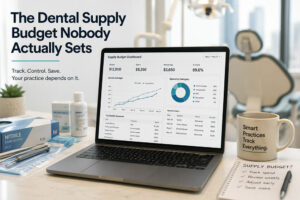
Financial stability is influenced not only by revenue but also by the predictability, discipline, and accuracy of expenditure patterns. Procurement data becomes a crucial financial tool, offering practices clear visibility into how supplies are consumed, how budgets align with real usage, and where efficiencies can be strengthened.
Procurement data supports financial strategy by:
- Revealing trends that influence supply planning
- Identifying categories with disproportionate spend
- Providing evidence for supplier negotiation
- Supporting long-term forecasting across multiple chairs or sites
- Highlighting variations in clinical workflows that impact expenditure
Key financial indicators derived from procurement data include:
- Stock-turnover ratios
- Category-level spend consolidation
- Historical ordering variances
- Budget adherence percentages
- Waste and expiry risk metrics
The ability to measure and compare these indicators empowers practice leaders to make decisions grounded in transparent, reliable data rather than assumptions.
How Does Procurement Data Enhance Scalability and Multi-Site Consistency?
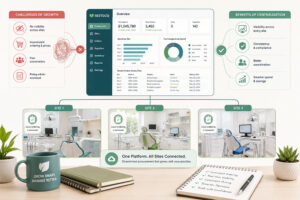
Growing practices require systems that can adapt without compromising operational reliability. Procurement data provides the structure needed to maintain consistency across multiple chairs or multiple locations.
For scalability, procurement data provides:
- Unified workflows across sites
- Standardised ordering and approval processes
- Comparable spend and usage metrics
- Multi-location inventory visibility
- Predictable consumption patterns that inform expansion planning
Practices benefit significantly when:
- Stock control is centralised
- Supplier lists and catalogues are harmonised
- Reports reveal cross-site efficiency opportunities
- Data highlights which locations require additional resources
Structured procurement data allows growth to feel controlled, coordinated, and supported by real-time insight.
How Does Technology Transform Raw Procurement Data Into Strategic Intelligence?
Modern procurement platforms convert complex data into accessible, actionable intelligence by integrating automation, analytics, and centralised systems. These capabilities allow practices to work more intentionally with their data.
Technology-enabled features that elevate data value include:
- Automated reorder triggers
- Role-based approval workflows
- Real-time dashboards
- Spend analytics
- Supplier performance summaries
- Budget alerts
- Detailed traceability and audit logs
Below is a table demonstrating how digital procurement systems convert data into strategic capability:
| Digital Capability | Data Generated | Strategic Use |
| Automated reorders | Consumption patterns | Forecasting and planning |
| Real-time dashboards | Spend and stock visibility | Budget alignment |
| Inventory alerts | Low-stock reporting | Prevention of operational disruptions |
| Workflow approvals | Ordering behaviour | Governance and accountability |
| Supplier comparison | Cost and delivery metrics | Supplier optimisation |
Technology ensures that procurement processes contribute directly to the overarching growth vision rather than functioning as disconnected administrative tasks.
Why Is Restocq the Ideal Partner for Practices Seeking Data-Driven Growth?
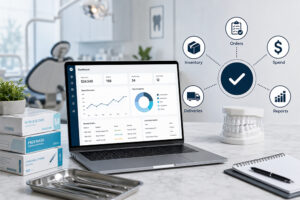
For dental practices ready to transform procurement from a manual obligation into a strategic advantage, Restocq provides a purpose-built platform that elevates every step of the process. Restocq centralises ordering, inventory tracking, supplier management, workflow approvals, analytics, and budget reporting into one simple ecosystem. This gives practices a comprehensive view of their supply chain, enabling leaders to make informed decisions that support both immediate operations and long-term growth.
Restocq’s ability to consolidate suppliers, automate reorders, and generate powerful data insights positions it as a leading solution for practices wanting to reduce administrative workload, increase operational predictability, and scale with confidence. By offering real-time reporting, consumption trend analysis, and advanced workflow tools, Restocq ensures practices gain clarity, control, and strategic direction. For practices seeking sustainable growth, enhanced efficiency, and stronger governance, Restocq is an indispensable partner in building a data-driven future.
Research References
Australian Dental Association – Infection control and dental procurement relevance
Australian National University – Supply chain risk and resilience research
Australian Government Productivity Commission – Efficiency insights relating to procurement processes
FAQs
1. How does procurement data help reduce inefficiencies?
Procurement information reveals patterns in ordering behaviour, stock usage, and inventory turnover. These insights highlight where processes are inconsistent, where waste occurs, and where workflows can be adjusted for more predictable outcomes.
2. Why is inventory visibility essential for operational stability?
Real-time visibility ensures that practices maintain optimal stock levels, avoid shortages, and prevent overstocking. This enhances workflow continuity and reduces administrative burden.
3. How does data improve budgeting accuracy?
Tracking spend against usage enables practices to allocate budgets more confidently, monitor trends, and forecast supply requirements with greater precision.
4. What role does procurement data play in multi-site practices?
It creates uniformity across locations, providing comparable metrics and simplified governance. This consistency supports cohesive growth and operational alignment.
5. How does automation improve procurement outcomes?
Automation reduces manual tasks, prevents ordering errors, and speeds up workflows. It also generates structured data that can be analysed for strategic decision-making.
6. Why should practices adopt a dedicated procurement platform?
Dedicated platforms offer centralisation, analytics, workflow controls, and automation not available in manual processes. This strengthens performance, improves efficiency, and supports long-term growth planning.