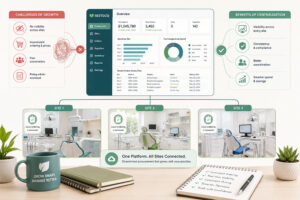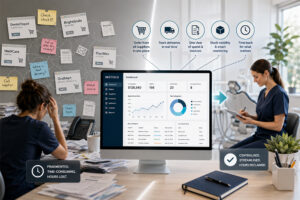

There is a certain kind of chaos that does not look dramatic. It is not loud. It does not always stop the day. Instead, it quietly drains time, focus, and energy. It appears in the form of scattered supplier contacts, inconsistent pricing, duplicate products, and deliveries that never quite arrive when expected. Over time, this fragmented approach creates friction across your entire practice.
Better supplier organisation is not about adding complexity. It is about removing it. When your supplier ecosystem is organised, transparent, and centralised, everyday workflow becomes predictable. The difference between chaos and control often comes down to how well your suppliers are structured, monitored, and aligned with your operational goals.
Why Does Fragmented Supplier Management Create Hidden Operational Stress?
Many practices work with multiple vendors without a unified system to manage them. Contact information is stored in different places. Contracts are not standardised. Pricing history is rarely documented in a central location. This fragmentation leads to:
- Variable pricing
- Overlapping products
- Missed delivery windows
- Inconsistent quality
- Duplicate ordering
Without supplier performance tracking, it becomes difficult to identify which vendors are reliable and which are causing bottlenecks. Delivery reliability scores, SLA adherence, and documented pricing history are often missing from manual systems.
When there is no centralised supplier dashboard, ordering becomes reactive rather than strategic. Teams spend time searching for information rather than focusing on patient care.
How Does a Unified Supplier Dashboard Restore Operational Clarity?
A unified supplier dashboard creates a single source of truth. Instead of fragmented spreadsheets and email threads, supplier data becomes accessible, transparent, and quality controlled.
Key elements of organised supplier management include:
- Preferred supplier lists
- Supplier tiering
- Standardised contracts
- Centralised pricing
- Documented pricing history
- Delivery calendar synchronisation
When vendor segmentation is implemented, practices can differentiate between high priority suppliers and occasional vendors. This allows better negotiation alignment and clearer accountability.
| Supplier Organisation Punchpoint | Precise Fix | Result |
| Fragmented contact info | Single supplier database | Faster ordering |
| Variable pricing | Standardised price reference | Spend consistency |
| Overlapping products | Consolidated suppliers | Remove duplicates |
| Late deliveries | Track delivery times | Better planning |
| Unknown quality | Supplier performance data | Better vetting |
A centralised supplier ecosystem removes uncertainty and supports consistent workflows.
How Can Supplier Performance Tracking Reduce Daily Disruption?
Supplier performance tracking introduces measurable accountability. Rather than relying on memory or informal feedback, practices can monitor:
- Delivery reliability scores
- Lead time performance
- SLA adherence
- Pricing variance
- Product quality consistency
When performance data is documented and comparable over time, decision making becomes analytic and actionable. Historical supplier data helps identify patterns of delay or inconsistency before they escalate.
Reliable suppliers contribute to dependable stock levels. Dependable stock levels support operatory readiness. Operatory readiness ensures smooth morning workflow optimisation. Everything is connected.
Why Does Supplier Consolidation Improve Workflow Efficiency?
Supplier consolidation reduces duplication and administrative overhead. When practices purchase similar products from multiple vendors without clear segmentation, complexity increases.
Consolidation creates:
- Fewer invoices to reconcile
- Simplified delivery planning
- Reduced pricing variance
- Improved negotiation leverage
- Clearer accountability
By eliminating overlapping products and standardising procurement channels, practices streamline ordering systems. Centralised and intuitive procurement environments reduce friction and improve responsiveness.
A structured supplier list also enables proactive replenishment. When lead time awareness is clear, reorder thresholds can be adjusted predictively rather than reactively.
How Does Better Organisation Improve Financial Visibility?
Supplier organisation directly impacts spend analytics and budget alignment. Without standardised pricing references and documented history, order cost variance can go unnoticed.
Real time spend tracking works best when supplier data is structured. When centralised pricing integrates with spend dashboards, practices gain:
- Budget threshold alerts
- Live cost data
- Variance tracking
- Month over month spend comparison
- Category level spend analytics
Organised supplier systems reduce financial guesswork. Transparent pricing and consolidated contracts strengthen budget discipline.
| Visibility Feature | Goal | Value |
| Real time spend | Avoid surprises | Controlled budgets |
| Threshold alerts | Warn before overspend | Better discipline |
| Comparative reporting | See month versus baseline | Informed decisions |
| Variance charts | Spot anomalies | Proactive action |
Financial clarity reduces stress and prevents reactive decision making at the end of the month.
How Does Supplier Organisation Support Long Term Practice Growth?
Growth indicators are often hidden within ordering data and supplier trends. SKU utilisation patterns, order frequency, and seasonal demand forecasts all rely on accurate supplier tracking.
Monitoring:
- Spend per category
- Supplier reliability
- Order frequency
- Delivery consistency
- Product category growth
provides predictive insight into operational health metrics.
| Data Type | Interpretation | Strategic Action |
| Order frequency | Stock demand cycles | Adjust reorder thresholds |
| Spend patterns | Allocation by supplier | Consolidate vendors |
| Seasonal spikes | Higher usage periods | Forecast and plan |
| Supplier delays | Performance issues | Review contracts |
| SKU growth | Increased demand | Scale procurement |
Better supplier organisation transforms procurement into a strategic growth lever rather than an administrative burden.
How Can Restocq Centralise and Simplify Your Supplier Ecosystem?
Restocq brings supplier organisation, performance tracking, and spend visibility into one intuitive platform. With unified supplier dashboards, standardised pricing records, and delivery tracking tools, practices eliminate fragmentation.
Instead of juggling contracts, invoices, and delivery calendars manually, Restocq consolidates supplier information into a centralised, accessible system. Delivery reliability, pricing history, and supplier tiering become transparent and measurable.
By integrating supplier data with real time inventory updates and automated reorder triggers, Restocq creates a streamlined procurement environment. Practices gain control, reduce duplication, and remove everyday chaos from their workflow.
References
- Australian Government Department of Industry, Science and Resources. Supply chain resilience initiatives.
- Chartered Institute of Procurement and Supply Australia. Procurement best practice guidance.
- Australian Commission on Safety and Quality in Health Care. Governance and operational standards.
FAQs
1. What is supplier organisation in a dental practice context?
Supplier organisation refers to structuring vendor relationships, contracts, pricing, and performance tracking within a centralised system.
2. How does supplier consolidation reduce chaos?
Consolidation reduces duplication, simplifies invoicing, and improves delivery predictability.
3. Why is pricing standardisation important?
Standardised pricing reduces order cost variance and improves budget discipline.
4. What are delivery reliability scores?
They measure how consistently a supplier delivers within agreed timeframes.
5. How does supplier performance tracking support growth?
It provides comparable historical data that informs strategic procurement decisions.
6. Can better supplier organisation improve team productivity?
Yes. Centralised and transparent supplier systems reduce time spent searching for information and resolving ordering issues.