
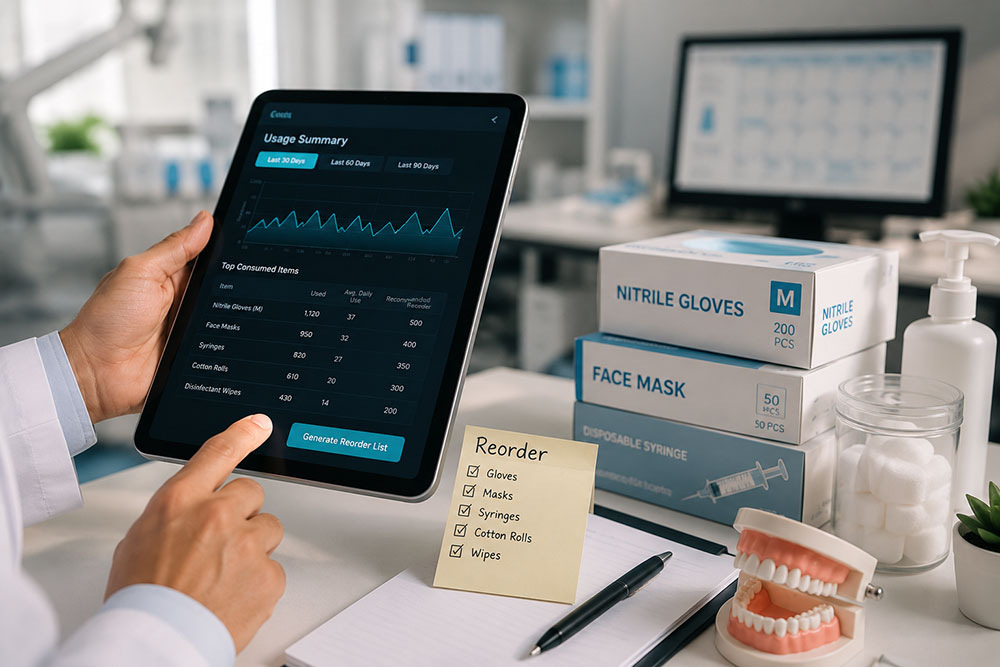
In a great many dental practices, the question of how much to reorder is answered the same way it has been for decades: someone glances at a shelf, forms an impression, and places an order based largely on instinct. Sometimes the instinct is good. Often it is not, and the practice ends up either drowning in stock it will not use for months or scrambling because it has run out of something essential mid-session. Reordering by guesswork is one of the last genuinely un-modernised corners of practice management, and it quietly costs money and causes stress. This article looks at why guesswork fails, what usage-based reordering does differently, and why letting data guide reordering is such an improvement.
The Trouble With Instinct
Reordering by instinct fails for a simple reason: human memory is a poor substitute for data. Nobody can accurately recall how quickly a given item is actually used across a busy practice, so estimates are rough, and rough estimates produce the twin problems of over-ordering and under-ordering. Guesswork does not fail occasionally; it fails structurally, because it is based on impression rather than fact.
Over-order and the practice ties up cash in stock, fills its storage, and risks items expiring before use. Under-order and it faces the disruption, and sometimes the premium cost, of running out and needing something urgently. Both are the direct result of not knowing the actual usage, and both are largely avoidable once usage is measured rather than guessed. The problem is not the people; it is the method.
What Usage-Based Reordering Does
The alternative to guessing is to base reordering on actual usage, which is exactly what intelligent reordering does. By tracking how much of each item a practice actually uses over time, a system can suggest what to reorder and when, grounded in real consumption rather than a hurried glance at a shelf. Restocq’s reordering works from a practice’s own usage patterns, turning history into sensible suggestions.
This changes reordering from a guess into an informed decision. Instead of wondering how much to buy, a practice is offered reorder suggestions based on past usage, which it can accept or adjust, so ordering reflects how the practice genuinely consumes rather than how someone happens to estimate. The mental load of remembering and calculating simply disappears, replaced by suggestions the practice can trust.
Par Levels and Consistency
Usage-based reordering pairs naturally with the idea of par levels: the sensible minimum and maximum quantities a practice wants to keep of each item. Rather than each order being a fresh guess, par levels set a consistent target, and reordering works to maintain it, so stock stays within a sensible band automatically. This brings a welcome consistency to something that was previously ad hoc.
With usage data and par levels working together, reordering becomes a reliable routine rather than a recurring decision. Real-time stock tracking with low-stock alerts means a practice is prompted before it runs out, keeping essential items available without the overstocking that ties up cash. The practice gets the best of both: it neither runs out nor drowns in stock, because the system holds it in the sensible middle.
Freeing the Team From Guesswork
Beyond the money saved, usage-based reordering gives a practice something valuable back: time and mental space. The person who previously carried the reordering decisions in their head, remembering what was low, guessing quantities, hoping they had it right, is freed from that ongoing burden, which is a genuine relief in a busy practice. Nobody misses the mental juggling.
There is also a consistency benefit that matters when people change. When reordering depends on one person’s instinct, it wobbles when that person is on leave or moves on, whereas usage-based reordering is grounded in the practice’s data rather than an individual’s memory, so it stays reliable regardless of who is ordering. The knowledge lives in the system, not in one person’s head, which makes the whole practice more resilient.
The Takeaway
Reordering by guesswork fails structurally, because human memory is no substitute for data, producing both the tied-up cash of over-ordering and the disruption of running out. Usage-based reordering works from a practice’s actual consumption, suggesting what to reorder and when, and paired with par levels and low-stock alerts it keeps stock in the sensible middle automatically, while freeing the team from carrying it all in their heads. Restocq’s intelligent reordering does exactly this, and you can book a demo to see how it could take the guesswork out of your ordering.
Frequently Asked Questions
Why is reordering dental supplies by guesswork a problem?
Because human memory is a poor substitute for data. Nobody can accurately recall how quickly each item is used across a busy practice, so estimates are rough, producing both over-ordering, which ties up cash and risks expiry, and under-ordering, which causes disruption and sometimes premium costs. Guesswork fails structurally because it is based on impression rather than actual usage.
What is usage-based reordering?
Usage-based, or intelligent, reordering bases reorder decisions on a practice’s actual consumption rather than a glance at a shelf. By tracking how much of each item is used over time, a system suggests what to reorder and when, grounded in real usage. The practice can accept or adjust the suggestions, so ordering reflects how it genuinely consumes rather than how someone happens to estimate.
What are par levels?
Par levels are the sensible minimum and maximum quantities a practice wants to keep of each item. Rather than each order being a fresh guess, par levels set a consistent target, and reordering works to maintain it, so stock stays within a sensible band automatically. Paired with usage data, they turn reordering from a recurring decision into a reliable routine.
How does usage-based reordering prevent running out?
By combining usage data with real-time stock tracking and low-stock alerts, so a practice is prompted before it runs out of an essential item. Because reordering is grounded in actual consumption and par levels rather than guesswork, stock is kept in the sensible middle, neither running out nor overstocking, which keeps essentials available without tying up cash in excess inventory.
Does data-based reordering help when staff change?
Yes, considerably. When reordering depends on one person’s instinct, it wobbles when they are on leave or move on. Usage-based reordering is grounded in the practice’s own data rather than an individual’s memory, so it stays reliable regardless of who is ordering. The knowledge lives in the system rather than one person’s head, making the practice more resilient to staff changes.
This blog is intended for general informational purposes only and does not constitute financial, clinical or business advice. Every practice’s circumstances are different, and results vary. Please seek advice tailored to your own practice before making procurement or financial decisions. Restocq is happy to show you how the platform could work for your practice.