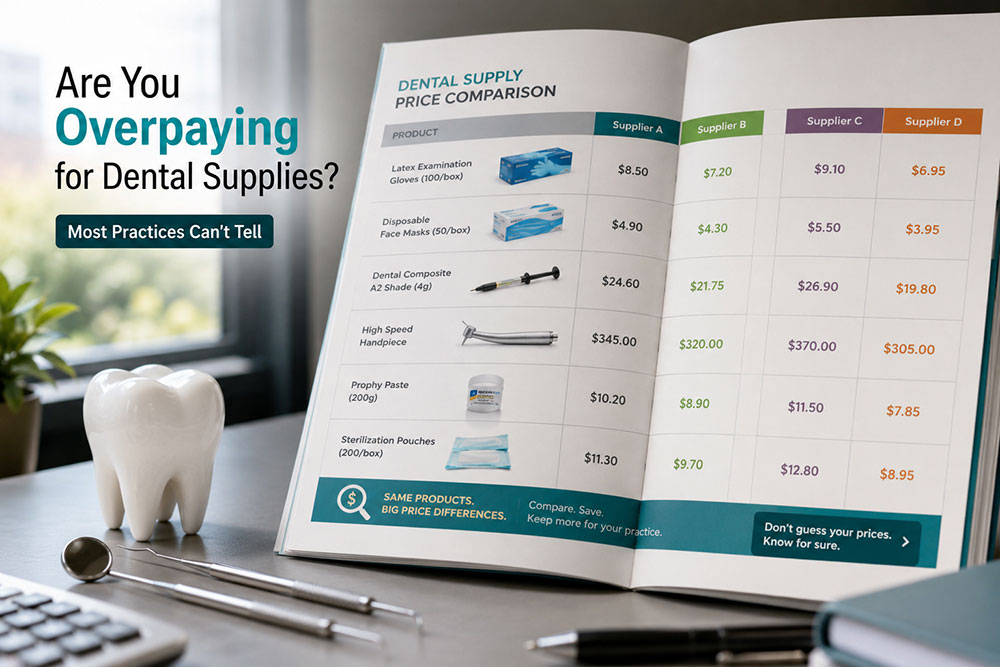
Here is an uncomfortable question for any dental practice: is the price you paid for your last box of gloves a good one? For most practices, the honest answer is that they have no idea. They paid what their usual supplier charged, because that is what they have always done, and comparing it against the alternatives would mean logging into several supplier sites, hunting down the same product, and doing arithmetic nobody has time for. Price, in dental procurement, is strangely invisible. This article looks at why practices so often overpay without knowing it, why price comparison is so difficult in the traditional way, and how genuine price transparency changes buying for the better.
Why Overpaying Is So Easy
Overpaying for supplies is rarely the result of carelessness; it is the result of a system that makes comparison hard. When each supplier has its own website, login and catalogue, checking whether a product is cheaper elsewhere is a genuine chore, so practices understandably default to their usual supplier and their usual price, without ever knowing how it compares. Loyalty and habit quietly cost money.
The result is that many practices are almost certainly overpaying on at least some items, not through any fault of their own but because the effort of finding out is too high. Prices vary between suppliers, and they change over time, so even a price that was competitive when a practice first chose it may no longer be. Without an easy way to compare, none of this is visible, and invisible inefficiency is the most persistent kind.
The Problem With Traditional Price Comparison
In theory, a practice could compare prices across suppliers; in practice, the friction makes it rare. Doing it properly means checking multiple sites, matching products that may be listed differently, accounting for pack sizes, and repeating the exercise regularly as prices move, which is simply more than a busy front-office team can sustain. So it does not happen, and the practice keeps paying whatever it pays.
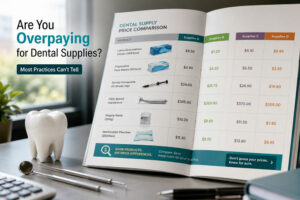
This is the gap that price transparency across suppliers is designed to close. When products from many suppliers sit in a single catalogue, comparison stops being a research project and becomes a glance. Restocq brings a wide range of products across suppliers into one place, so a practice can see options and prices side by side rather than hunting for them, which turns comparison from something that never happens into something that happens by default.
How Transparency Changes Behaviour
Something interesting happens when prices become visible: buying behaviour changes on its own. When a practice can easily see that an equivalent product is available at a lower price, or is prompted with a cheaper alternative, the sensible choice becomes the easy choice, and savings follow without any heroic effort. Insights on cheaper products and tailored suggestions put better decisions directly in front of the person ordering.
This is the quiet power of transparency: it does not require anyone to become a procurement expert or to spend hours hunting for deals. It simply makes the better option visible at the moment of ordering, so good decisions happen naturally. Over a year of orders, those small, easy savings compound into something a practice genuinely notices, all from making price visible rather than hidden.
Choice and Transparency Together
Crucially, price transparency does not mean sacrificing choice. A practice does not have to abandon preferred products or trusted suppliers to benefit; it simply gains the information to choose well. Seeing the alternatives means a practice can stick with a product where it matters and switch where it does not, making informed choices rather than defaulting blindly.
This combination of choice and transparency is what makes the difference. Being able to compare across a wide range of products and suppliers in one place gives a practice both the freedom to order what it wants and the information to know whether it is paying a fair price for it. That is a far better position than the traditional one, where a practice has habit on its side but no idea whether habit is costing it. Informed choice beats blind loyalty every time.
The Takeaway
Most practices cannot tell whether they are overpaying for supplies, not through carelessness but because traditional price comparison, across separate supplier sites, logins and catalogues, is too much friction to sustain. When products from many suppliers sit in one catalogue, comparison becomes a glance rather than a research project, and simply making price visible changes buying behaviour and compounds into real savings, without sacrificing choice. Restocq brings that price transparency into one place, and you can book a demo to see whether your practice is paying more than it needs to.
Frequently Asked Questions
How do I know if my practice is overpaying for supplies?
Most practices cannot tell, because comparison across separate supplier sites, logins and catalogues is too much effort to sustain, so they default to their usual supplier and price. Prices vary between suppliers and change over time, so even a once-competitive price may no longer be. Without an easy way to compare, overpaying stays invisible, which is why bringing prices into one view matters.
Why is comparing dental supplier prices so hard?
Because each supplier has its own website, login and catalogue, and products may be listed differently with varying pack sizes. Doing comparison properly means checking multiple sites, matching products, and repeating the exercise as prices move, which is more than a busy front-office team can sustain. The friction is why practices default to habit rather than comparing, and quietly overpay as a result.
How does price transparency change buying?
When prices become visible, buying behaviour changes on its own. Once a practice can easily see that an equivalent product is cheaper, or is prompted with a cheaper alternative at the moment of ordering, the sensible choice becomes the easy choice. Transparency does not require anyone to become a procurement expert; it simply makes the better option visible, and small easy savings compound over a year.
Does price comparison mean giving up preferred products?
No. Price transparency does not mean sacrificing choice. Seeing the alternatives means a practice can stick with a preferred product or supplier where it matters and switch where it does not, making informed choices rather than defaulting blindly. The combination of choice and transparency gives both the freedom to order what you want and the information to know whether the price is fair.
Can a procurement platform show prices across suppliers?
Yes. A procurement platform can bring a wide range of products across many suppliers into a single catalogue, so a practice sees options and prices side by side rather than hunting across separate sites. Some also offer insights on cheaper products and tailored suggestions, putting better decisions directly in front of the person ordering and turning comparison into something that happens by default.
This blog is intended for general informational purposes only and does not constitute financial, clinical or business advice. Every practice’s circumstances are different, and results vary. Please seek advice tailored to your own practice before making procurement or financial decisions. Restocq is happy to show you how the platform could work for your practice.