
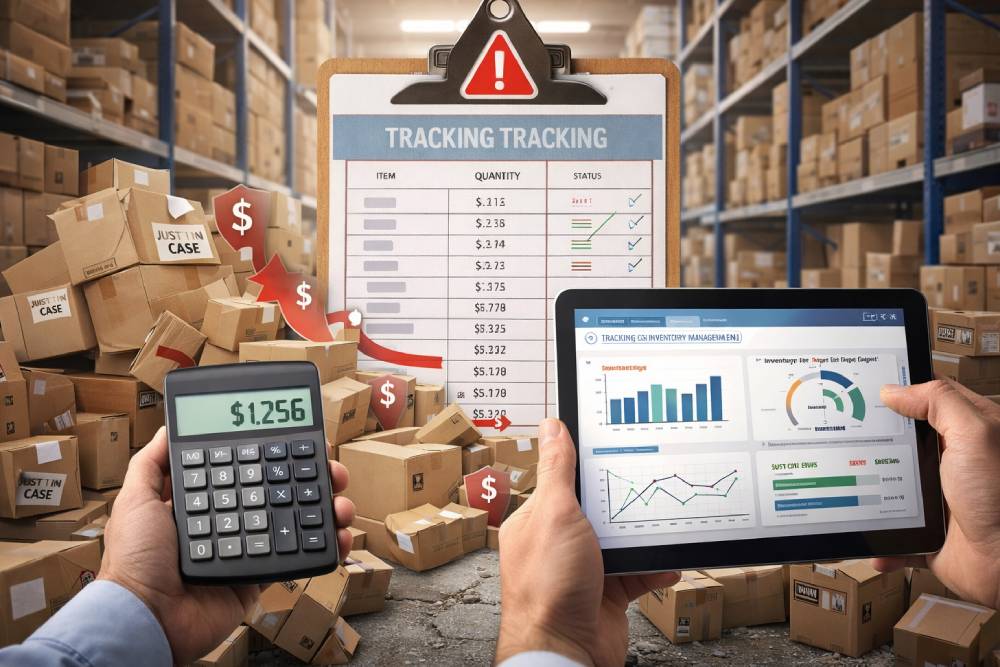
Why Does “Just-in-Case” Ordering Seem Like a Safe Bet?
It’s easy to understand why many practices and businesses default to over-ordering supplies. The logic seems sound: avoid the nightmare of running out by always having “just a little extra.” But while this might appear harmless — even smart — it often hides a much deeper, more expensive problem. What seems like peace of mind on paper can end up quietly draining your budget, disrupting your inventory flow, and tying up working capital in idle stock.
Across sectors like dentistry, healthcare, and hospitality, the real risk isn’t in stockouts — it’s in the false sense of security that excess inventory creates. And without better tracking systems in place, you may not even realise the extent of your loss.
What Are the Hidden Financial and Operational Costs?
“Just-in-case” ordering leads to multiple cost layers that go far beyond the price tag of the items ordered.
Financial Impacts
- Capital tie-up – Funds that could be used for staff, equipment or marketing are locked in unused inventory.
- Holding costs – Storage, insurance, and environmental controls (e.g., temperature for medical supplies) add up.
- Wastage & spoilage – Items expire or degrade before use, especially in healthcare or food-related settings.
Operational Impacts
- Cluttered stockrooms – Disorganisation reduces visibility of what’s available, causing reordering of stock you already have.
- Increased admin – More items require more time to manage, track, rotate, and reconcile.
- Duplicate orders – Poor communication across teams often leads to unintentional multiple orders of the same item.
How Does “Just-in-Case” Ordering Disrupt Forecasting and Budgeting?
When your supply strategy is based on fear instead of data, it disrupts everything downstream.
- Unpredictable spending patterns – Difficult for managers or accountants to anticipate monthly expenses.
- Budget overruns – Even small overages, repeated over months, result in thousands lost annually.
- Inefficient supplier relationships – Fragmented or inconsistent ordering patterns can prevent you from negotiating better deals or consolidating deliveries.
What Makes Inventory Tracking an Effective Solution?
The key to replacing guesswork with control lies in smarter tracking systems. These aren’t just software tools — they’re frameworks for aligning your team, automating manual tasks, and transforming how you make procurement decisions.
Core Benefits of Better Tracking:
- Real-time stock visibility – Know exactly what’s on hand, what’s been used, and what’s running low.
- Usage-based reordering – Automate reorders based on historical usage patterns, not fear.
- Multi-user permissions – Role-based access ensures only authorised staff can place orders.
- Budget caps and alerts – Stay within spending limits and track cost by department or category.
Which Inventory Metrics Should You Be Tracking?
To make informed decisions, you need to move beyond basic quantity levels and start monitoring key performance indicators:
| Metric | What It Measures | Why It Matters |
| Inventory Turnover Rate | Frequency of stock replenishment | Low turnover = idle stock, high waste risk |
| Stock-to-Usage Ratio | Stock held vs average monthly usage | Indicates overstocking or underutilisation |
| Order Frequency | Number of orders placed per period | High frequency can mean rushed or fragmented ordering |
| Item Expiry Tracking | Shelf-life monitoring of sensitive items | Prevents losses from spoilage or expired stock |
| Supplier Lead Time | Time between ordering and delivery | Helps align reordering timelines to actual need |
What Are the Most Common Triggers for Just-in-Case Ordering?
Understanding why teams default to over-ordering is critical in changing behaviours. Common triggers include:
- Fear of stock-outs – Particularly in healthcare or customer-facing roles where downtime is unacceptable.
- Lack of visibility – Staff can’t see what’s already in stock and re-order “just to be safe.”
- Past bad experiences – A previous emergency shapes ongoing behaviour, even when conditions have changed.
- No set ordering protocols – Different people placing orders without coordination or shared history.
How Can You Transition Away from Just-in-Case Without Risk?
It’s not about swinging from one extreme to the other. The best shift is a managed one — supported by smart systems and guided by usage data.
Transition Strategy:
- Audit your current inventory – Identify excess items, frequently expired goods, and items rarely used.
- Set par levels – Establish minimum and maximum stock levels based on real usage.
- Consolidate supplier access – Use a centralised platform so all team members order through the same system.
- Assign ordering roles – Limit who can place orders and require approval where necessary.
- Implement alerts – Use digital systems to notify you when stock hits low thresholds.
Why Are Manual Processes No Longer Enough?
Many clinics and practices still rely on handwritten logs, spreadsheets, or memory to manage supplies. But these methods are no match for modern expectations — especially when staff turnover, growing teams, or multiple locations are involved.
Manual systems:
- Do not provide real-time insights
- Cannot track consumption trends
- Are vulnerable to duplication and human error
- Make scaling up chaotic and inconsistent
What Role Does Centralised Procurement Play in Fixing the Problem?
Centralising your ordering through a single, intuitive system addresses many pain points at once. It improves accountability, reduces double-handling, and ensures all ordering behaviour aligns with your actual usage — not guesswork.
Key centralised features to look for:
- Live inventory dashboard
- Supplier directory in one place
- Custom roles and permissions
- Budget tracking and reports
- Order history logs and analytics
Why Restocq Is the Smart Way Forward
If you’re ready to move beyond reactive, over-cautious ordering, Restocq offers a tailored solution designed to eliminate inefficiency at its source. With a clean interface and powerful backend, Restocq enables you to:
- See what’s in stock across your entire practice — in real-time
- Set budget alerts and permissions to control spend across teams
- Use predictive reordering based on actual item usage
- Access all your suppliers through one central platform
- Track orders from placement to delivery
- Generate reports that help you forecast needs and reduce waste
With Restocq, you’re gaining clarity, consistency, and cost-efficiency across your operations. Make smarter supply decisions and reclaim control over your inventory.
References
- Australian Government, Department of Industry, Science and Resources – Inventory Management Guide
- Dental Board of Australia – Guidelines on Infection Control and Consumables
- Australian National Audit Office – Inventory Management in Health Sector
Frequently Asked Questions (FAQs)
1. What is “just-in-case” ordering, and why is it risky?
Just-in-case ordering refers to buying more stock than needed to avoid running out. While it may seem like a safety net, it often results in higher holding costs, stock wastage, and budget overruns.
2. How can better tracking reduce my inventory costs?
By tracking real-time usage and setting automated reorder points, you can avoid overstocking, reduce waste, and ensure supply aligns with demand.
3. What tools should I look for in an inventory tracking system?
Essential features include real-time dashboards, usage-based reordering, budget alerts, multi-user access, and consolidated supplier ordering.
4. Can I implement better ordering processes without changing suppliers?
Yes. A good tracking system like Restocq integrates with your existing suppliers while centralising access and improving order consistency.
5. Is it possible to prevent waste without risking stock-outs?
Yes. Using predictive reordering based on actual usage patterns ensures you have what you need, when you need it — without oversupply.
6. How does Restocq help multi-location practices?
Restocq allows unified inventory control across locations, tracks spend by site, and supports team-based ordering roles to streamline operations.