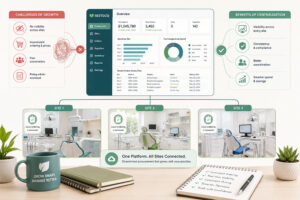

It is easy to assume that staff retention depends purely on culture, leadership, or remuneration. While those elements matter, there is another powerful influence hiding in plain sight. Procurement clarity and operational predictability shape the everyday experience of your team. When ordering systems are chaotic, unpredictable, or reactive, stress builds quietly. When procurement is structured, automated, and transparent, morale improves.
Good procurement practices reduce workload stress, eliminate friction, and create a supportive, team friendly environment. Predictable tasks and low friction workflows allow staff to focus on patient care instead of firefighting stock issues. Over time, this consistency strengthens engagement and retention.
Why Does Procurement Clarity Directly Influence Staff Satisfaction?
Procurement clarity removes uncertainty. When there is a central supplier list, automated approvals, and clearly defined ordering roles, accountability becomes fair and visible. This avoids the all too common scenario where one team member carries the burden of ordering and reconciliation.
Strong systems include:
- Centralised supplier access
- Clear role permissions
- Automated reordering
- Budget visibility dashboards
- Integrated notify systems
When these tools are intuitive and repeatable, they create predictable routines. Staff are no longer second guessing whether orders have been placed or whether budget thresholds are being exceeded.
| Procurement Practice | Impact on Staff |
| Automated reordering | Less manual work |
| Clear ordering roles | Equity in responsibility |
| Central supplier list | Fewer errors and frustrations |
| Budget visibility | Reduced financial guesswork |
| Integrated notify systems | Fewer surprises |
By reducing admin burnout and repetitive manual checks, practices cultivate a more supportive and professional growth environment.
How Do Low Friction Workflows Reduce Burnout?
Burnout often stems from unpredictable interruptions. Inconsistent stock logging, reactive restocking, and unclear approval flows force teams into constant problem solving. A stress reducing, structured procurement process removes these friction points.
Low friction workflows are:
- Automated
- Predictable
- Clear accountability driven
- Transparent
- Consistent
With automated approvals and centralised order tracking, staff experience fewer emergency restocking situations. Instead of responding to crises, they operate within a dependable rhythm. This consistency enhances morale and reduces the cognitive load that comes with fragmented systems.
Employee engagement increases when administrative tasks feel manageable rather than overwhelming. Predictable procurement contributes to a workplace where responsibilities are balanced and transparent.
What Can Ordering Data Reveal About Your Practice’s Growth Trajectory?
Beyond operational ease, ordering data provides powerful growth indicators. Spend analytics and consumption rate tracking offer insight into practice expansion, service demand, and seasonal demand forecasts.
Monitoring key data points such as:
- Average order frequency
- Spend per category
- SKU utilisation patterns
- Month over month spend
- Supplier reliability
- Order cost variance
creates an analytic and actionable picture of operational health metrics.
| Data Type | Interpretation | Strategic Action |
| Order frequency | How often stock runs low | Adjust reorder thresholds |
| Spend patterns | Money tied up in supplies | Review supplier contracts |
| Seasonal spikes | Higher usage periods | Forecast and plan |
| Supplier delays | Delivery performance issues | Consider alternatives |
| SKU growth | Rising product demand | Scale procurement |
Trend based analysis transforms procurement from a reactive necessity into a predictive growth tool. Historical and comparable data helps forecast demand, manage budgets, and align supplier performance with long term strategy.
How Does Real Time Spend Awareness Protect Staff Confidence?
End of month panic affects more than finances. It impacts morale. When spend tracking is not immediate and visible, teams operate in uncertainty. Real time spend dashboards and threshold alerts introduce anticipatory clarity.
Key features include:
- Live cost data
- Budget aligned thresholds
- Variance tracking
- Order versus budget comparison
- Spend forecast signals
| Visibility Feature | Goal | Value |
| Real time spend | Avoid surprises | Controlled budgets |
| Threshold alerts | Warn before overspend | Better discipline |
| Comparative reporting | See month versus baseline | Informed decisions |
| Variance charts | Spot anomalies | Proactive action |
Traceable and visible financial data fosters transparency. When staff understand the boundaries and see spending patterns clearly, they feel more confident making procurement decisions.
Why Are Practices Moving Away From Manual Ordering Systems?
Manual ordering systems often rely on spreadsheets and scattered email chains. Spreadsheet limitations, forgotten orders, and inconsistent stock logging create avoidable stress.
Common challenges include:
- Double entries
- Missed reorder signals
- Forgotten supplier emails
- Late deliveries
- Human error in handwritten logs
Digital systems offer automation, visibility, and consistency. Central ordering portals consolidate supplier interactions, while integrated price lists enhance spend control.
| Manual Ordering Issue | Digital Counterpart | Advantage |
| Handwritten logs | Automated inventory | Fewer mistakes |
| Email orders | Central ordering portal | Better tracking |
| Separate price tracking | Integrated price lists | Spend control |
| No alerts | Real time alerts | Prevent stockouts |
Shifting to automation reduces reactive restocking and strengthens operational predictability. Over time, this contributes to a healthier and more stable team environment.
How Can Restocq Strengthen Retention Through Smarter Procurement?
Restocq brings together supplier organisation, automated reordering, spend analytics, and real time dashboards in one centralised platform. By offering proactive replenishment, budget visibility, and supplier performance tracking, Restocq removes friction from daily workflows.
The platform supports clear role permissions, central supplier lists, and predictive insights based on consumption patterns. Instead of juggling spreadsheets and fragmented systems, practices gain a dependable and intuitive solution that reduces admin burnout and enhances team confidence.
By transforming procurement into a transparent, structured, and supportive process, Restocq contributes to staff satisfaction, operational growth, and long term stability.
References
- Safe Work Australia. Managing psychosocial hazards at work.
- Australian Government Department of Industry, Science and Resources. Supply chain resilience initiatives.
- Chartered Institute of Procurement and Supply Australia. Procurement and supply management insights.
FAQs
1. How does procurement impact staff retention?
Clear and predictable procurement systems reduce workload stress and create a supportive work environment, improving morale.
2. What are growth indicators in ordering data?
Order frequency, SKU growth, and month over month spend trends reveal demand increases and operational expansion.
3. Why is automated reordering important?
Automated reordering prevents stock shortages and removes the burden of manual checks.
4. How does supplier organisation reduce stress?
A unified supplier dashboard and standardised pricing eliminate confusion and duplicated effort.
5. What is the risk of manual ordering systems?
Manual systems increase errors, missed reorder signals, and reactive restocking.
6. How does real time spend tracking support teams?
Visible spend data reduces financial uncertainty and prevents end of month surprises, strengthening staff confidence.