Most dental practices have a budget for supplies in the same way most people have a plan to exercise more: it exists as a vague intention, rarely written down, and almost never checked against reality until something forces the issue. The trouble is that dental consumables are a substantial, relentless cost, and a cost that is not watched is a cost that quietly grows. Spend on supplies tends to drift upward not through any single dramatic decision but through countless small ones, none of which anyone is tracking. This article looks at why so few practices genuinely manage their supply spend, what a real budget changes, and how spend visibility turns a fuzzy intention into actual control.
Why Supply Spend Drifts
The reason supply spend creeps upward is rarely extravagance; it is invisibility. When ordering is spread across multiple suppliers, several team members and a whole month, no single person ever sees the full picture, so the total is only discovered after the fact, if at all. Each order seems reasonable in isolation, and the cumulative figure arrives as an unwelcome surprise at the end of the month or the quarter.
Without visibility, there is no natural check on spending. A practice cannot manage what it cannot see, and supply spend is often precisely the thing it cannot see clearly: fragmented across invoices, buried in admin, and never totalled until the accountant does it much later. This is not a discipline problem so much as an information problem, and information problems have information solutions.
What a Real Budget Changes
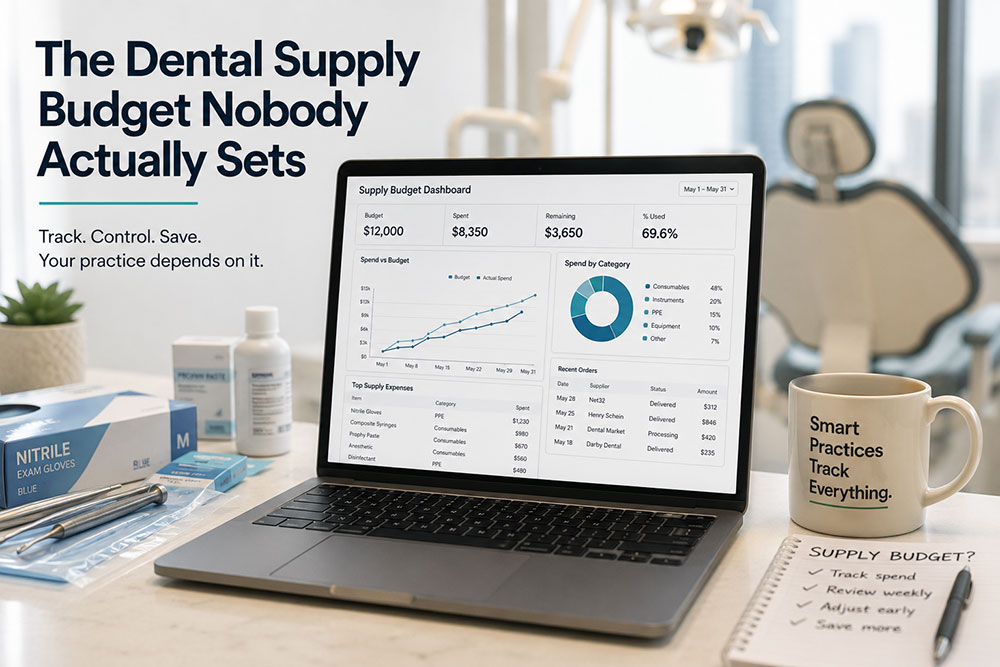
Setting an actual, monitored budget for supplies changes the entire dynamic. Instead of discovering the total after the money is spent, a practice that sets a budget and tracks spend against it in real time can see where it stands at any moment, and adjust before the month runs away from it. This is exactly the shift that spend visibility in a procurement platform makes possible, replacing after-the-fact surprise with in-the-moment awareness.
With budgets and automated alerts, a practice can set a monthly figure and be told as it approaches or exceeds it, rather than finding out weeks later. Restocq lets a practice set budgets and monitor spend against them, with alerts and reports that keep spending in view, so the budget becomes a live tool rather than a forgotten intention. The number stops being a guess and becomes something the team can actually steer.
Visibility for the Whole Team
A budget only works if the people doing the ordering can see it, and this is where many good intentions fall down: the person setting the budget and the people placing orders are often not the same, and the ordering team has no line of sight to the spend. Giving the whole team visibility of the budget and where the practice stands against it turns budgeting from a top-down constraint into a shared awareness.
When everyone involved in ordering can see the budget and the running total, spending decisions are made with context rather than in the dark. Shared spend visibility means the team naturally moderates its own ordering, because the consequences of each order are visible rather than hidden. This shared awareness tends to do more for spending discipline than any memo ever could, simply because people manage what they can see.
From Reactive to Proactive
The deeper shift that spend visibility enables is from reactive to proactive management. A practice that only learns its supply spend after the fact is forever reacting to numbers it can no longer change, whereas one that watches spend as it happens can make decisions while they still matter. That is the difference between managing a budget and merely reporting on one.
Proactive spend management also surfaces useful questions: which categories are consuming the budget, whether spend is rising, where the money is actually going. These are questions a practice can only ask once it can see its spend clearly, and they are exactly the questions that lead to better decisions. Visibility, in other words, is not just about control; it is the foundation for genuinely understanding and improving how a practice spends.
The Takeaway
Dental supply spend drifts upward not through extravagance but through invisibility: fragmented across suppliers, staff and a whole month, it is never totalled until it is too late to change. Setting a real, monitored budget, with spend visible to the whole team in real time and alerts as limits approach, turns a vague intention into genuine control and shifts a practice from reacting to numbers to steering them. Restocq gives practices that spend visibility and budgeting in one place, and you can book a demo to see how it could work for your practice.
Frequently Asked Questions
Why does dental supply spend keep creeping up?
Usually because of invisibility rather than extravagance. When ordering is spread across multiple suppliers, several team members and a whole month, no single person sees the full picture, so the total only appears after the fact. Each order seems reasonable alone, but the cumulative figure arrives as a surprise. Without visibility there is no natural check on spending as it happens.
How does setting a supply budget actually help?
A monitored budget changes the dynamic from discovering the total after the money is spent to seeing where the practice stands at any moment and adjusting before the month runs away. With budgets and automated alerts, a practice is told as it approaches or exceeds its limit rather than finding out weeks later, so the budget becomes a live tool rather than a forgotten intention.
Who should be able to see the supply budget?
Ideally everyone involved in ordering. Budgets often fail because the person setting them and the people placing orders are not the same, and the ordering team has no line of sight to the spend. Giving the whole team visibility of the budget and the running total means spending decisions are made with context, and the team naturally moderates its own ordering.
What is spend visibility in dental procurement?
Spend visibility means being able to see supply spending as it happens, rather than discovering it after the fact. It typically includes setting budgets, tracking spend against them in real time, and receiving alerts and reports. This shifts a practice from reacting to numbers it can no longer change to managing spend proactively while decisions still matter.
Can a procurement platform help manage supply budgets?
Yes. A procurement platform can let a practice set monthly budgets and monitor spend against them, with automated alerts and reports keeping spending in view, and give the whole ordering team shared visibility. This turns budgeting from a top-down constraint into a shared awareness and from an after-the-fact report into a live tool the team can actually steer by.
This blog is intended for general informational purposes only and does not constitute financial, clinical or business advice. Every practice’s circumstances are different, and results vary. Please seek advice tailored to your own practice before making procurement or financial decisions. Restocq is happy to show you how the platform could work for your practice.