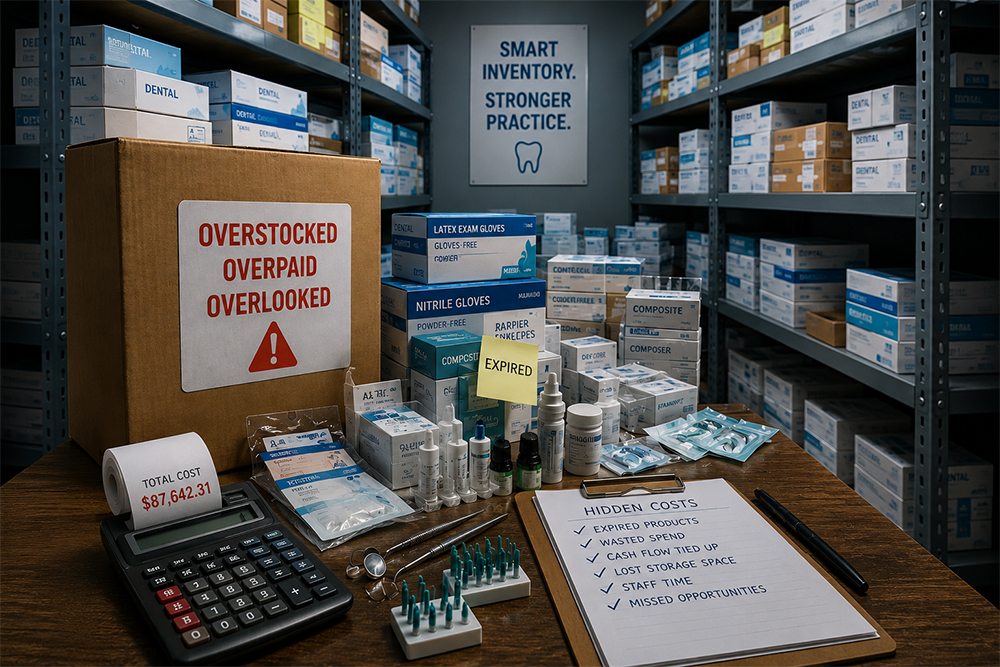
Every practice has one: the cupboard nobody fully audits, stacked with composite shades nobody uses, gloves in a size nobody wears, and a box of something that expired during a previous government. Dental inventory management rarely makes anyone’s list of favourite jobs, which is exactly how stockrooms drift into quiet, expensive chaos. The money is real on both ends of the problem, because overstocking ties up cash and breeds expiry waste while understocking cancels procedures and triggers panic orders. This article puts numbers-free honesty around both failure modes, explains why mid-year is the natural moment for a reset, and looks at what real-time inventory control changes for the team that runs the cupboard.
The Stockroom Nobody Audits
Overstocking is procurement’s most comfortable mistake. Ordering extra feels prudent, bulk feels efficient, and a full cupboard feels like preparedness. The costs hide in plain sight: cash sitting on shelves instead of in the business, materials expiring before use, duplicate purchases of items already owned but unfindable, and storage space doing warehouse duty in a clinical building.
Expiry is the sharpest edge. Dental materials carry use-by dates for clinical reasons, and an over-bought item that lapses is not a bargain that went wrong; it is money disposed of in full compliance with the bin. Practices that finally audit a long-neglected stockroom are routinely startled by what the shelves confess.
Understocking: The Mirror-Image Cost
The opposite failure is louder. A missing essential discovered mid-morning means urgent calls, rush freight, borrowed materials, or in the worst case, a rescheduled patient and an empty chair that still costs money by the hour. The clinical team absorbs the stress, the front desk absorbs the apology, and the practice absorbs the cost premium of buying anything in a hurry.
Understocking also distorts behaviour over time. Teams burnt by a stock-out start hoarding defensively, which feeds the overstocking problem, which obscures what is actually running low. The two failure modes are not opposites; they are a cycle.
Why Mid-Year Is Stocktake Season
There is a natural moment to break that cycle, and the middle of the year is it. Financial periods close and reset, budgets are reviewed, and a stocktake done now gives the next twelve months a truthful starting point: what is actually on hand, what expired unused, and what the practice genuinely consumes month to month.
That last number is the valuable one. Real consumption, not gut feel, is the foundation every good reorder decision stands on, and most practices have never seen theirs written down.
What Real-Time Inventory Control Changes
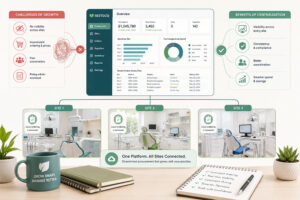
Modern procurement platforms have made the spreadsheet-and-clipboard era optional. Monitoring stock levels in real time, with alerts when items run low, means the cupboard reports its own status instead of waiting to be audited, preventing overstocking and understocking from the same dashboard. How Restocq works is built around exactly this visibility, pairing live inventory with ordering so the gap between noticing and restocking closes to a few clicks.
Visibility changes the psychology as much as the process. When everyone can see what is on hand, defensive hoarding loses its reason to exist, and ordering decisions move from anxiety to information.
Building the Habit: Par Levels and Usage-Based Reordering
The end state worth aiming for is boring in the best way. Each item carries a par level, the minimum the practice should hold, set from real usage. Reordering triggers when stock approaches it, with intelligent suggestions based on past consumption doing the remembering. The stockroom stops being a mystery and becomes a system that one person can run in minutes a week, and any trained person can run in their absence.
Teams that have made the shift describe the difference plainly, and the experiences practices share cluster around the same two words: time and control.
The Takeaway
Dental inventory goes wrong quietly in both directions: overstocking buries cash and breeds expiry waste, understocking cancels chairs and triggers expensive panic. The fix is visibility, a mid-year stocktake that establishes the truth, then real-time stock monitoring with par levels and usage-based reordering so the truth maintains itself. For practices ready to retire the mystery cupboard, the team at Restocq offers a demo and a 30 day free trial of the platform, and the stocktake you do first will make the case better than any article can.
Frequently Asked Questions
How much stock should a dental practice keep on hand?
Enough to cover real consumption between orders plus a sensible buffer, set item by item as a par level based on actual usage. The right number differs by practice and product; the wrong numbers are the ones chosen by guesswork or fear of running out.
What is a par level in dental inventory?
A par level is the minimum quantity of an item a practice decides to keep on hand. When stock approaches the par level, it triggers reordering. Setting par levels from real usage data turns restocking from a judgment call into a routine, repeatable process.
Why do dental supplies expire unused?
Usually because purchasing outpaced consumption: bulk buys that felt economical, duplicate orders of items already in the cupboard, or stock bought without visibility of what was on hand. Real-time inventory tracking and usage-based ordering address the causes rather than the symptom.
How often should a dental practice do a stocktake?
A full stocktake at least annually, with mid-year a natural anchor point as financial periods reset, supported by continuous visibility in between. Practices using real-time inventory tools effectively run a rolling stocktake, making the annual exercise a confirmation rather than an archaeology dig.
Can inventory software prevent stock-outs completely?
It dramatically reduces them by flagging items approaching their par levels before they run out, but no system replaces sensible buffers and supplier lead-time awareness. The realistic goal is converting stock-outs from regular surprises into rare, manageable exceptions.
This blog is intended for general informational purposes only and does not constitute financial, clinical or business advice. Every practice’s circumstances are unique. Please assess your own requirements when making procurement and inventory decisions. Restocq encourages practices to book a demonstration to see how the platform fits their specific workflows.