
In most dental practices, supply ordering has a single point of failure, and she is currently on annual leave. The logins, the preferred brands, the supplier rep’s mobile number, the knowledge that the cheap gloves tear and the expensive ones do not: it all lives in one experienced head, and the practice only discovers how much when that head is away, off sick, or handing in notice. Dental supply ordering built on personal memory works brilliantly right up until the day it does not. This article looks at what the one-person system really costs, and how practices are replacing memory with systems that any trained team member can run, without the practice owner losing an ounce of control.
The Single Point of Failure Wearing Scrubs
The person who does the ordering is usually excellent at it, which is precisely the problem. Excellence breeds reliance, reliance breeds opacity, and within a few years the practice’s entire procurement operation exists as institutional knowledge with annual leave entitlements.
Audit the dependency honestly: who else knows every supplier login, which items are ordered from where and why, what the monthly spend usually looks like, and which substitutions are acceptable when the usual item is out? In many practices the answer is nobody, and the backup plan is a phone call to someone’s holiday.
What Turnover and Leave Actually Cost
The bill arrives in predictable instalments. During leave: missed reorders, duplicate purchases by well-meaning stand-ins, and stock-outs discovered chairside. During turnover: weeks of disrupted ordering while a successor reconstructs supplier relationships and preferences from scratch, usually by over-ordering to be safe. During handover, if there is one: hours of verbal download that captures half the picture.
None of this appears as a line item, which is why it persists. The cost of fragile procurement is paid in rush freight, wasted stock, staff stress and the occasional rescheduled patient, all of it attributed to bad luck rather than bad architecture.
Systems Beat Memory
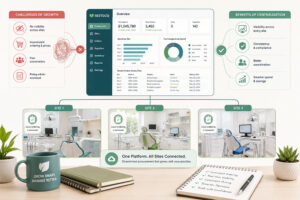
The fix is structural: move the knowledge out of the head and into the system. A centralised platform holds the supplier catalogue, the order history and the favourites lists, so the practice’s accumulated preferences become visible, searchable assets instead of private expertise. How Restocq works demonstrates the shape of it: every past order on record, frequently used items saved to shared lists, and intelligent reordering suggestions built from the practice’s own usage rather than anyone’s recall.
Once the knowledge lives in the system, continuity stops depending on the calendar. The ordering routine a stand-in inherits is the same one the regular runs, because both of them are running the same lists.
Delegation Without Losing Control
The owner’s objection to delegation is always the same, and it is fair: handing out ordering access historically meant handing out the chequebook. Modern platforms separate the two. Multi-user access with roles and approval flows lets team members raise orders within defined permissions, while spend that exceeds thresholds routes to the owner or manager for a one-click approval.
Control improves rather than erodes. Instead of one trusted person operating invisibly, the practice gets a visible pipeline: who ordered what, when, from whom, approved by whom. Delegation with an audit trail is tighter governance than concentration without one.
Future-Proofing Through Every Transition
Staff change is not a risk to eliminate; it is a certainty to design for. Practices that treat procurement as a system, with shared lists, recorded history, role-based access and approval flows, sail through leave, parental absence and resignations with their ordering rhythm intact. The new team member’s onboarding shrinks from months of oral tradition to a tour of the platform.
Practices that have made the change tend to describe the same before-and-after, and the stories teams tell return to one theme: the relief of knowing the system no longer depends on any one of them.
The Takeaway
Dental supply ordering that lives in one person’s head is a liability with excellent performance reviews. The resilient version moves the knowledge into a system: shared favourites, full order history, usage-based suggestions, and role-based access with approvals so delegation increases control instead of surrendering it. The right week to make that change is any week your ordering person is actually in the building. The team at Restocq can show the whole workflow in a short demo, with a 30 day free trial to prove it on your own practice’s ordering before anything changes for good.
Frequently Asked Questions
Who should be responsible for ordering in a dental practice?
Responsibility should sit with a role supported by a system, not with an individual’s memory. A practice manager or senior nurse typically leads, with shared lists, order history and approval flows ensuring any trained team member can maintain the routine during leave or transition.
How do approval workflows work in supply ordering?
Team members raise orders within permissions set for their role; orders above defined thresholds route automatically to an owner or manager for approval before submission. The result is delegated day-to-day ordering with centralised control and a complete audit trail of who ordered and approved what.
How can a practice prepare ordering for staff leave?
Before leave begins: confirm shared access to the ordering platform, ensure favourites lists and par levels are current, and brief the stand-in on the approval flow. When the knowledge already lives in the system, preparation is a conversation rather than a handover document.
What ordering knowledge should never live in one head?
Supplier access, item preferences and acceptable substitutions, usual order quantities and frequencies, budget expectations, and the reasoning behind brand choices. All of it can be captured as shared lists, order history and notes in a centralised platform, where it survives every roster change.
Does delegating ordering increase spending risk?
Not when delegation comes with structure. Role-based permissions, spend thresholds and approval flows mean more people can raise orders while fewer surprises reach the invoice. Visible pipelines are easier to govern than one trusted person ordering invisibly, however reliable they are.
This blog is intended for general informational purposes only and does not constitute financial, clinical or business advice. Every practice’s circumstances are unique. Please assess your own requirements when making procurement and staffing decisions. Restocq encourages practices to book a demonstration to see how the platform fits their specific workflows.